
A sofa is one of the most frequently used pieces of furniture in a home, yet many of our daily habits influence its cleanliness in ways we rarely consider. From sitting down immediately after returning home to eating dinner in front of the television, small routines can gradually change the condition of upholstered furniture. This is why sofa deep cleaning in Singapore is an important consideration for homeowners who want to maintain their furniture beyond regular vacuuming and occasional stain removal.
Most people associate sofa cleaning with obvious problems such as food stains, unpleasant smells or visible dust. However, upholstery hygiene is also influenced by how we interact with furniture every day. The way we use our sofas, the surrounding indoor environment and even the frequency of household cleaning can affect how quickly residue accumulates.
Understanding these everyday habits can help homeowners make more informed decisions about upholstery maintenance while keeping their living spaces comfortable and welcoming.
The First Thing You Do After Coming Home
Imagine returning home after a long day. You put down your bag, remove your shoes and settle onto the sofa for a few minutes before doing anything else.
It is a familiar routine in many Singapore households.
Throughout the day, clothing can come into contact with public transport seats, office furniture, restaurant chairs and other shared surfaces. Fine dust and everyday particles may transfer onto clothing during these activities.
When we sit on upholstered furniture, some of those particles can eventually transfer onto the fabric.
This does not mean sitting on the sofa after returning home is inherently unhygienic. It simply demonstrates how frequently used furniture interacts with the wider environment.
For households where the sofa receives constant daily use, regular vacuuming and periodic professional cleaning can help manage accumulated debris.
Why Sofa Deep Cleaning in Singapore Matters for Daily Hygiene
Sofas are different from many other household surfaces because upholstery is made from fabric fibres, seams and cushioning.
A dining table can usually be wiped clean after a meal. A tiled floor can be mopped. Upholstered furniture requires a different approach because particles and residue may settle between fibres or collect around cushion seams.
Regular vacuuming removes loose surface debris, but it cannot necessarily remove residue from perspiration, body oils or dried spills.
Professional sofa deep cleaning in Singapore provides a more thorough approach for suitable upholstery by loosening and extracting accumulated contamination.
This makes deeper cleaning useful as part of periodic fabric maintenance, particularly for furniture that receives heavy daily use.
Habit 1: Eating Meals on the Sofa
For many households, the living room has become an extension of the dining area.
Weekend takeaway dinners, afternoon snacks and late-night desserts often happen in front of the television.
While eating on the sofa is convenient, it also creates opportunities for crumbs, sauces and drinks to come into contact with upholstery.
Small food particles can fall between cushions, where they remain unnoticed until someone removes the seats for cleaning.
Liquid spills introduce another challenge. Even when the visible moisture is wiped away quickly, residue may remain within the fabric.
Homeowners can reduce accumulation by vacuuming cushion gaps regularly and attending to spills promptly.
For established stains, professional cleaning may be more appropriate than repeatedly applying household cleaning products.
Habit 2: Using the Same Seat Every Day
Almost every household has a favourite sofa seat.
It might be the corner closest to the television, the section beside the coffee table or the cushion directly underneath the ceiling fan.
Over time, this area experiences significantly more contact than the rest of the furniture.
Natural body oils, perspiration and everyday residue can gradually transfer onto upholstery through repeated use.
This may contribute to visible differences between heavily used and less frequently used areas.
One way to assess your sofa is to compare the favourite seat with fabric underneath a removable cushion.
If the exposed upholstery appears noticeably duller, accumulated residue may be contributing to the difference.
However, physical wear and sunlight exposure can also affect fabric appearance, so professional assessment is useful when determining what cleaning can realistically improve.
Habit 3: Letting Small Spills Dry Naturally
A minor spill may seem harmless, particularly when it disappears after being wiped with a tissue.
However, upholstery is absorbent to varying degrees, depending on the material.
When liquid penetrates the fabric, some residue may remain after the moisture evaporates.
Over time, the affected area can become increasingly noticeable, especially when additional dust settles onto it.
For fresh spills, gently blotting excess liquid is generally preferable to aggressive rubbing.
Homeowners should also avoid experimenting with several different cleaning chemicals, particularly when the fabric composition is unknown.
Professional stain treatment depends on the material, age of the stain and substance involved. Complete removal cannot always be guaranteed.
Habit 4: Forgetting to Vacuum Between Cushions
The visible surface of a sofa receives most of our attention, but some of the greatest accumulations of debris can occur in hidden areas.
Cushion gaps, seams and corners are common places for crumbs, hair and other particles to collect.
These areas may remain untouched during quick household cleaning sessions.
Removing suitable cushions periodically allows homeowners to vacuum the spaces underneath and inspect the upholstery more closely.
An appropriate upholstery attachment can help remove loose debris without unnecessarily disturbing the fabric.
This simple habit supports professional sofa deep cleaning in Singapore by reducing the amount of dry contamination that accumulates between deeper cleaning appointments.
Habit 5: Allowing Pets to Use the Sofa
Pets are part of everyday family life, and many households happily share their sofas with dogs or cats.
However, pet-friendly homes may experience additional upholstery maintenance needs.
Fur can settle onto fabric surfaces, while dander and fine particles carried on an animal’s coat may accumulate around favourite resting spots.
Dogs that regularly return from outdoor walks may also bring small amounts of dust indoors on their paws.
Regular vacuuming is particularly useful for pet-friendly households, especially around cushion seams and the areas where pets usually rest.
Professional cleaning can provide a deeper refresh when accumulated residue becomes difficult to manage through ordinary maintenance.
Habit 6: Using Fragrance Instead of Cleaning Upholstery
Scented candles, diffusers and room sprays are common features in Singapore homes.
They can create a pleasant atmosphere, but fragrance and cleanliness are different things.
Fabric upholstery can gradually hold onto odours associated with food, pets, perspiration and household activity.
When a persistent smell appears to be coming from the sofa, adding fragrance may temporarily change how the room smells without addressing the underlying residue.
Cleaning the upholstery itself is a more direct approach when accumulated contamination is contributing to the odour.
However, not every persistent smell originates from the sofa, so identifying the source is important before arranging treatment.
Habit 7: Assuming Dark-Coloured Sofas Stay Cleaner
Dark upholstery is often considered practical because certain stains are less visible.
However, darker fabric does not prevent residue from accumulating.
Dust, body oils and food particles can still settle onto the upholstery regardless of colour.
In some cases, dark fabric may conceal gradual discolouration, making it harder to recognise when the sofa needs attention.
Homeowners should therefore avoid relying entirely on appearance.
Routine vacuuming, periodic inspection and appropriate professional cleaning remain useful for both light and dark upholstery.
Sofa Deep Cleaning in Singapore for Different Household Lifestyles
Every household uses its sofa differently, so upholstery maintenance should reflect actual living habits.
A home occupied by two adults may experience different levels of wear from a household with young children, pets and frequent visitors.
Similarly, a sofa used primarily during weekends will have different cleaning needs from furniture occupied for several hours every day.
Rather than following an identical schedule for every home, consider how frequently the sofa is used, whether food is regularly consumed there and whether pets share the furniture.
Professional sofa deep cleaning in Singapore can then be planned according to the condition of the upholstery rather than an arbitrary cleaning interval.
How Singapore’s Indoor Environment Affects Sofa Hygiene
Singapore’s warm and humid climate creates particular considerations for fabric furnishings.
Many homes alternate between natural ventilation and air conditioning throughout the day. Windows may be opened during cooler periods, while fans and air conditioning circulate indoor air at other times.
Air movement can carry fine particles around the home, some of which eventually settle onto upholstered furniture.
Unlike hard surfaces, fabric upholstery contains fibres and seams that can hold onto particles.
Humidity also makes appropriate moisture management important during professional cleaning.
Effective upholstery maintenance should therefore consider both the cleaning process and the drying conditions afterwards.
How Professional Sofa Deep Cleaning Works
Professional upholstery cleaning should begin with an assessment of the sofa material, condition and existing stains.
Different fabrics have different cleaning requirements. Some upholstery materials may be suitable for controlled wet extraction, while others require alternative methods.
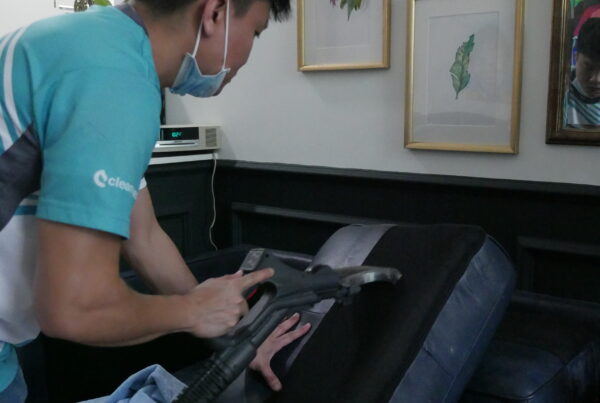
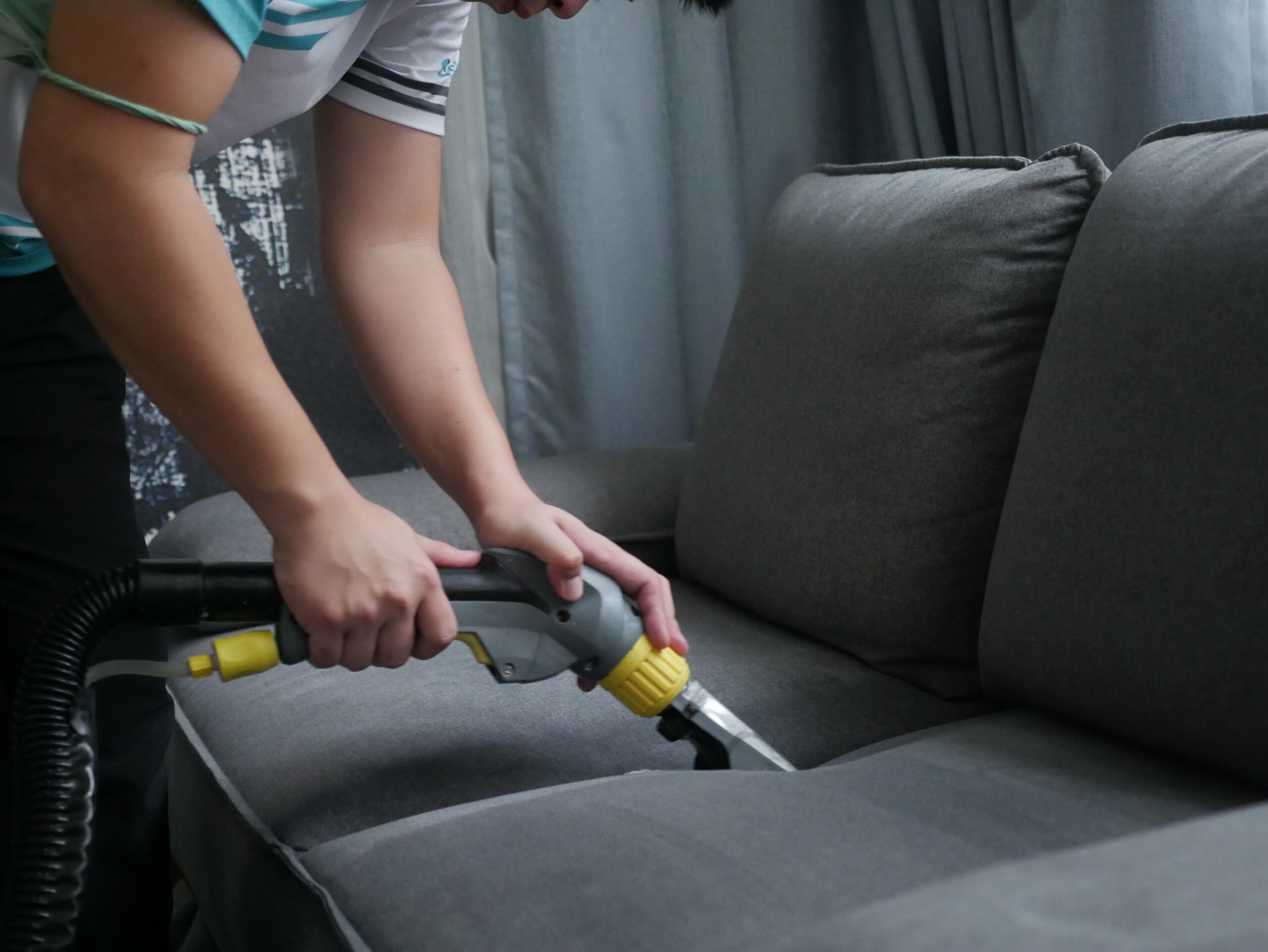
For suitable fabric sofas, deep extraction cleaning is designed to loosen accumulated residue before extracting moisture and contaminants from the upholstery.
Particular attention may be given to heavily used areas and visible stains where appropriate.
The goal is to achieve effective cleaning while respecting the characteristics and limitations of the fabric.
This is why sofa deep cleaning in Singapore should be approached as specialised upholstery care rather than ordinary household washing.
Why Drying Matters After Sofa Cleaning
Drying is an important part of professional upholstery cleaning, particularly in Singapore’s humid environment.
A sofa that remains excessively wet for an extended period can create inconvenience for the household.
At Cleanshades, blow drying is included after sofa deep cleaning to help reduce remaining moisture and minimise waiting time before the furniture returns to normal use.
This is especially practical for households where the living room is used frequently throughout the day.
However, actual drying time may vary depending on upholstery material, cleaning conditions and the surrounding environment.
How Often Should You Arrange Sofa Deep Cleaning in Singapore?
There is no universal cleaning schedule that applies to every household.
For many regularly used sofas, assessing the need for professional cleaning every six to twelve months can be a practical starting point.
However, furniture shared by children and pets may require more frequent attention, while lightly used upholstery may remain in good condition for longer.
Homeowners should look for changes such as accumulated stains, dullness in frequently used areas, persistent odours and heavy daily use.
These signs can help determine when routine vacuuming is no longer sufficient.
The upholstery’s material and manufacturer’s care instructions should also influence the cleaning schedule.
Can Deep Cleaning Remove Every Stain?
Professional cleaning can improve many types of upholstery staining, but complete removal is not always possible.
The outcome depends on the substance responsible for the stain, how long it has been present, the fabric type and any previous cleaning attempts.
Some marks may be permanent changes to the upholstery rather than removable contamination.
For example, sunlight fading, physical wear and damaged fibres cannot be restored through cleaning alone.
A responsible provider should assess the sofa and explain realistic expectations before treatment.
Professional cleaning should focus on achieving the best appropriate result for the condition of the furniture.
Sofa Cleaning Before Festive Gatherings
Festive celebrations often encourage homeowners to pay closer attention to their living spaces.
Before Chinese New Year, Hari Raya, Deepavali, Christmas or family gatherings, the sofa becomes one of the most important areas to prepare.
Guests may spend hours sitting and socialising in the living room.
Scheduling sofa deep cleaning in Singapore before major occasions allows homeowners to refresh frequently used upholstery in advance.
Planning ahead also provides time for appropriate cleaning and drying rather than arranging treatment at the last moment.
Creating a Practical Sofa Maintenance Routine
Maintaining upholstery does not require complicated daily cleaning.
A simple routine can make a meaningful difference.
Vacuum the sofa periodically using an appropriate upholstery attachment. Pay attention to seams, cushion gaps and spaces underneath removable cushions.
Respond to spills promptly by gently blotting excess liquid.
Avoid applying unfamiliar cleaning chemicals without checking whether they are suitable for the upholstery.
Where appropriate, rotate removable cushions to distribute wear more evenly.
Pet owners may also benefit from vacuuming their animals’ favourite resting areas more frequently.
These habits help maintain the sofa between professional cleaning appointments.
Sofa Hygiene as Part of Whole-Home Fabric Care
A sofa is only one of several large fabric surfaces inside a home.
Curtains, mattresses, carpets, rugs and upholstered dining chairs also interact with the indoor environment.
Each item has different cleaning requirements, depending on its material, construction and usage.
Homeowners can create a practical maintenance rotation rather than attempting to clean every soft furnishing simultaneously.
For example, heavily used living room upholstery may receive attention first, followed by mattresses or curtains at another time.
If your bedroom furnishings are also due for maintenance, explore Cleanshades’ mattress cleaning service in Singapore.
For broader information about indoor environments and household pollutants, the United States Environmental Protection Agency’s indoor air quality resources provide useful educational guidance.
Choosing a Professional Sofa Cleaning Service
When selecting a cleaning provider, homeowners should consider more than price alone.
Ask whether the company assesses upholstery materials before cleaning, what procedures are used and how moisture is managed.
It is also useful to understand whether stain treatment is included and what results can realistically be expected.
Different upholstery materials require different considerations, and a suitable cleaning method should be selected based on the condition of the furniture.
A professional service should prioritise effective cleaning while respecting the material being treated.
Conclusion: Small Habits Make a Difference to Sofa Hygiene
The condition of a sofa is influenced by much more than its age.
Everyday habits such as eating in the living room, using the same seat repeatedly, sharing furniture with pets and postponing small spills can gradually affect upholstery cleanliness.
These habits are part of normal household life, but understanding their effects makes maintenance easier.
Regular vacuuming, prompt spill care and sensible fabric handling can help manage everyday debris. When deeper residue has accumulated, sofa deep cleaning in Singapore provides a more thorough way to refresh suitable upholstery.
The goal is to maintain furniture that continues to support everyday life, keeping the living room comfortable, welcoming and well cared for.